
Most businesses struggle with the relevance of their traffic. The website has pages but Google barely notices them. That is where advanced SEO strategies come in.
In this guide I will share SEO strategies that I use as a freelance marketer and explain what is changing in 2026 as AI‑powered search grows. Read an example from a business project discover the mistakes that I run into most often and find three actions you can take this week to improve Google rankings.
One note before we start SEO strategies take time. Results vary by industry competition and website. I will point out where that matters as we go.
What Are Advanced SEO Strategies and Why Do They Matter in 2026?
Advanced SEO strategies go beyond keywords. They combine search intent, content quality and technical health into one working system.
Basic SEO asks “Did I use the keyword?” Advanced SEO strategies ask “Does this page fully answer what the searcher wanted and can Google understand it easily?”
That second question becomes more important in 2026 as people increasingly turn to search results that contain AI‑generated summaries, maps and chat‑style tools. According to Google the same fundamentals still apply to its AI features: people‑first content that search engines can crawl and index. You can read the details in Google’s guidance on AI features and your website.
So the goal is not to chase every feature. The goal is to build pages that deserve to be found wherever the search happens.
SEO Strategies Start With Search Intent
Every search has a purpose. Someone typing “SEO services near me” wants to hire help. Someone typing “what is a tag” wants to learn. If a page targets one, that page delivers. If a page targets the other, rankings stall, with perfect keyword placement.
How to Check Search Intent Before You Write
Open Google type your target keyword and study the page of results. See the format the angle and the questions each page answers. Then identify what is missing. That gap is where opportunity lies.
Intent Checklist
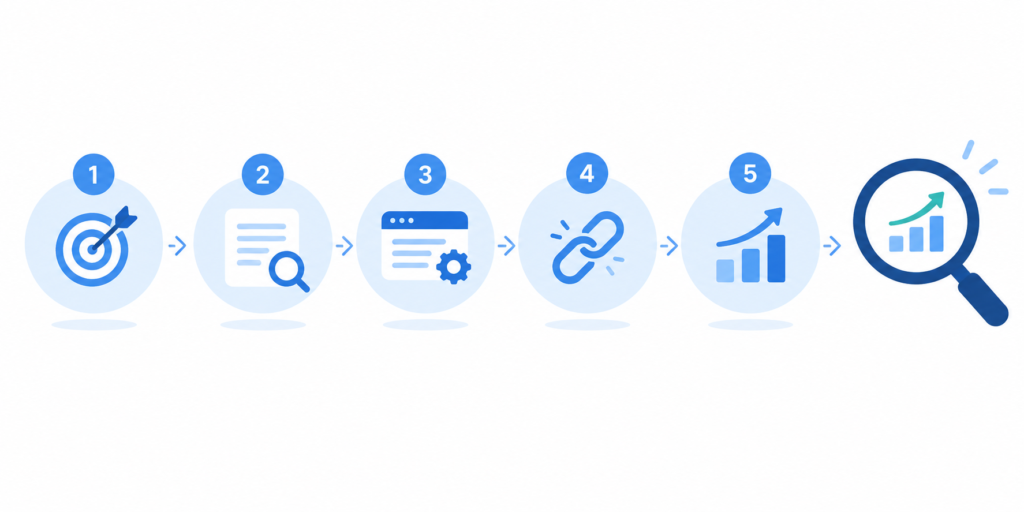
1. Search your target keyword in an incognito window.
2. Note the content type: blog post, service page, tool or video.
3. List the questions the top pages answer.
4. Find at least one question they handle poorly.
5. Build your outline around both the questions and the gap.
Why the Basics Still Come First
Why the basics still come first. Advanced SEO strategies do not mean ignoring the basics. Clear page titles, working links, fast mobile pages and solid content continue to do most of the lifting. If those are broken no clever tactic will save the page.
Think of SEO strategies as a layer on top of a healthy website, not a replacement for one.
Want a pair of eyes on your site? Ask me about an SEO audit. We can look at the basics together.
An Example: Advanced SEO Strategies for a Local Business Website
Theory is easy. Practice is where you learn what actually works. Here is a project I worked on The Starting Point
A small local business wanted visibility on Google and more potential customers coming through its website. The site had information. The pages were not properly optimized and the content was not targeting the right keywords. It ranked poorly for searches and got very little organic traffic.
The SEO Strategies I Used on This Project
I did not try to fix everything at once. I worked through these steps:
1. Local keyword research to see what customers really searched for.
2. On‑page optimization of titles, meta descriptions and headings.
3. Content improvements so each page answered a question.
4. Better internal linking between pages.
5. A technical SEO check, including usability.
6. Ongoing tracking, in Google Search Console.
Why Local Keyword Research Came First
Why local keyword research came first. Everything else depends on targeting the right searches. If a page aims at the wrong phrase, polished titles and clean code will not help much.
Local Keyword Research as Part of SEO Strategies in Advanced SEO Strategies
Business owners frequently think they understand how customers search. From my experience the real phrases differ. Customers use location words, plain language and specific problems. Therefore I began with the words people actually typed using the names the owner gave the service.
What I Can’t Claim
After a few months the website gained better visibility for some of its target keywords and organic traffic improved. I do not have numbers that I can confidently share. I will not invent any.
What I can say is this: SEO takes effort and even small ranking improvements matter when they bring people to a business. Results like this also depend on competition, location and the starting condition of the site. Your experience may differ.
The Biggest Lesson From That Project in Advanced SEO Strategies
SEO is not about adding keywords. It is about understanding search intent improving the WEBSITE and consistently tracking what works. That one lesson shapes every one of the SEO strategies in this article.
Advanced SEO Strategies for Keyword Research and Search Intent
Keyword research no longer means exporting a list and picking the highest-volume terms. It means understanding the questions behind the words.
Group Keywords by Intent Not Volume Advanced SEO Strategies
Different intents need pages. The table below shows a way to match them.
| Search intent | Example search | Best page type |
| Informational | how to improve Google rankings | Blog guide |
| Local or commercial | SEO services near me | Service page |
| Transactional | hire a freelance digital marketer | Service or contact page |
Match the Page to the Searcher
A person who wants to learn will bounce from a hard‑sell service page. A person ready to hire will get impatient with a 3,000‑word guide. Matching the format to the intent keeps visitors on the page. That tells Google the page fits the query.
Applying SEO Strategies to Each Intent Type
For informational keywords, teach first and add a soft call to action. For commercial keywords, show your services, proof and contact details clearly. For transactional keywords, remove friction and make the next step obvious.
Use Related Keywords Naturally in advanced SEO strategies
Secondary phrases such as “improve Google rankings” and “SEO techniques 2026” should appear where they fit the sentence. Never force them in. If a sentence sounds awkward rewrite it clearly. Readers will notice. So will Google.
Advanced SEO Strategies for On‑Page Optimization
On‑page work is where most small websites gain ground because the fixes are within your control.
Write Titles and Meta Descriptions That Earn Clicks
Keep titles under 60 characters so they do not get cut off in search results. Write descriptions of 150 to 160 characters that promise a clear benefit. Google may rewrite them. A strong draft still helps.
Fix Pages With High Impressions and Low Clicks
Search Console shows which pages appear in results but rarely get clicked. These pages already have visibility so a better title or description can lift clicks without any new content.
On‑Page Advanced SEO Strategies You Can Apply Today
• Put the topic near the start of the title.
• Use one H1 per page.
• Write H2s that mirror questions.
• Answer the question in the first few paragraphs.
• Add descriptive alt text to images.
• Keep paragraphs short so mobile readers can scan.
Link Your Pages With Purpose
Links help visitors and search engines move through your site. Link from pages to related ones and use descriptive anchor text. For example a post about keyword research can point to your SEO services page. A service page can point to your beginner’s SEO guide.
Technical SEO Techniques 2026 That Support SEO Strategies
Technical problems quietly cap your rankings. Fix these before you invest in content.
Make Your Website Mobile‑Friendly
Most people search on their phones for local services. Check that text is readable and buttons are easy to tap. Pages do not jump around while loading.
Improve Page Speed and Core Web Vitals
Slow pages frustrate visitors. Google’s Core Web Vitals measure loading, interactivity and visual stability. You can learn what each metric means in Google’s Core Web Vitals guide on web.dev. Compressing images removing scripts and choosing hosting are good starting points.
Check Indexing
A page that is not indexed cannot rank. In Search Console review the Pages report to see which URLs are indexed and why other URLs are not indexed.
A Quick Technical Audit in Four Steps
1. Test your pages on a phone.
2. Run a speed test. Note the slowest pages.
3. Check the indexing report for errors.
4. Fix broken links and redirect chains.
Technical Mistakes That Undermine SEO Strategies
The common mistake I see is ignoring technical SEO because it feels less creative than writing. Great content on an indexed site is, like a great shop that is locked.
How to Optimize for AI Search With SEO Strategies
Optimizing for AI search and user intent is one of the changes in 2026. People use AI search more and more to find information compare options and solve problems. Businesses need content that answers those questions clearly.
Answer Real Questions
Instead of writing an article around one keyword, think about the questions people actually ask. Give direct answers first and then add detail and examples. Clear headings help both readers and search systems to follow.
Show Real Experience
Generic content is easy to copy. Real examples, honest lessons and first‑hand opinions are not. That is why I include project experience in my work instead of repeating common advice.
Add Structured Data Where It Fits
Structured data helps search engines understand a page. Google explains the basics in its introduction to structured data. Article schema suits a post like this one. FAQ markup is fine to add. Google now limits FAQ results to a small set of sites so do not count on them appearing.
Write for People Not for AI
It is tempting to write for algorithms. I do not. The goal is content for people that’s also easy for search engines to understand.
Why Human-First Content Wins Among SEO Strategies
Search engines and AI tools both lean toward content that’s clear, accurate and genuinely useful. If you write for the reader first you are already doing most of what SEO strategies ask of you.
Not sure how your content looks to AI search? Book a content review. I will show you where your pages can be clearer.
Build Trust: How -E-A-T Supports Advanced SEO Strategies
E-E-A-T stands for experience, expertise, authoritativeness and trustworthiness. Google says it is not a ranking factor but its systems favor content that shows these qualities. You can read more in Google’s guide to creating people‑first content.
Show. Expertise
Share what you actually did. Name the process, the tools and the lessons. Specific detail is hard to fake. Readers trust it.
Be Honest About Limits
Say what you do not know. In this article I chose not to share ranking numbers I could not confirm. Admitting limits makes the rest of your advice more believable.
Add Clear Author Details
An author name, a bio and easy contact details help readers see who is behind the advice.
Quality Over Quantity: Why Publishing Less Can Improve Google Rankings
You will often hear that you must publish as often as possible to rank. I disagree. Many businesses publish articles when they should improve the ones they already have.
Sometimes updating an article with information, relevant keywords and clearer headings does more than writing a brand‑new post. It is one of the advanced SEO strategies and it costs far less.
Here is a simple refresh routine:
1. Pick a post that already gets impressions.
2. Check whether it still matches search intent.
3. Update facts, examples and screenshots.
4. Improve headings. Add questions.
5. Strengthen links then track results for weeks.
Publishing only makes sense when each new page serves a need.
Using Google Search Console to Improve Google Rankings
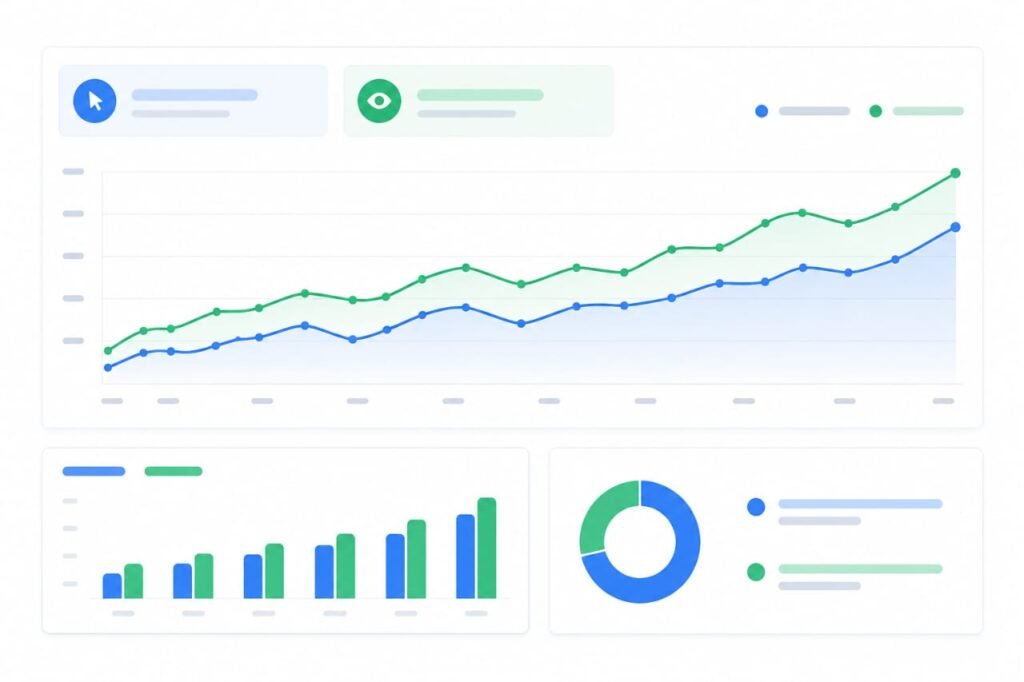
Start with the Performance report. Look at impressions, clicks and average position. Then:
– Find pages with impressions but few clicks and improve their titles.
– Spot queries where you rank on page two and strengthen those pages.
– Check the indexing report for any pages that Google could not index.
Change one item at a time whenever possible then observe the data. That way you discover what actually moves the numbers.
Common Mistakes That Hold Back SEO Strategies in Advanced SEO Strategies
These are the mistakes I see often and how I fix them.
| Mistake | Why it hurts | How I fix it |
| Focusing only on keywords | Ignores what customers really want | Research search intent first |
| Publishing without keyword research | Content targets nothing in particular | Plan topics around real questions |
| Ignoring technical SEO | Pages load slowly or fail to index | Run a basic technical audit |
| Neglecting mobile users | Visitors leave quickly | Test and fix mobile layouts |
| Expecting fast results | Leads to giving up too early | Track progress and improve steadily |
The last one matters most. Rankings rarely jump overnight. Anyone who promises otherwise is overselling.
Basic vs Advanced SEO: A Quick Comparison in Advanced SEO Strategies
| Area | Basic SEO | Advanced SEO strategies |
| Keywords | Pick high-volume terms | Match terms to search intent |
| Content | Publish often | Improve quality and update old posts |
| Technical | Fix obvious errors | Monitor speed, indexing and mobile |
| Measurement | Check rankings occasionally | Track clicks and impressions regularly |
Three Things to Do This Week
Advanced SEO Strategies If no other tasks are planned begin with these three steps:
1. Find the keywords. Discover what potential customers search for. Verify that your site targets those phrases. Local businesses should concentrate on searches.
2. Optimize your pages. Enhance titles, descriptions, headings and content on important pages. Ensure those pages work well on devices.
3. Review Google Search Console. Search for pages that have impressions but few clicks. Identify keywords where ranking can improve. Note any indexing issues.
FAQs About SEO Strategies
What are SEO strategies?
Advanced SEO strategies are methods that go beyond keyword placement. They combine search intent, high‑quality content, technical health and regular measurement to increase visibility.
How long do advanced SEO strategies take to work?
The answer varies. In my experience visible improvements often appear after months. The timeline depends on competition and the starting condition of the website. SEO requires effort.
Do I need to publish content to improve Google rankings?
No. Updating and improving existing pages is often more valuable than creating ones.
Does AI search replace SEO?
No. The fundamentals remain unchanged: content, clear structure and a healthy site. AI search simply raises the bar for clarity.
Can a small local business use SEO strategies on a budget?
Yes. Local keyword research, on‑page fixes and Search Console are all inexpensive. Consistency matters more than budget.
Here’s a conclusion that works your business in. I don’t have your website name or address, so those are in brackets for you to fill in.
Conclusion: Advanced SEO Strategies You Can Start Today
The best advanced SEO strategies in 2026 aren’t tricks. They’re a habit: understand search intent, write something genuinely useful, structure it clearly, and measure what happens.
Your next steps:
- Pick one underperforming page.
- Rewrite it around a single search intent.
- Add a direct answer and a real example.
- Track the change in Search Console over the next 4 to 8 weeks.
Do that consistently, and you’ll improve your Google rankings the sustainable way.
I’m a freelance digital marketer based in Wayanad, and I help small businesses get found by the right customers on Google. If you’d like help applying these steps to your own website, visit jibinaj.com or get in touch for a friendly chat about your goals.